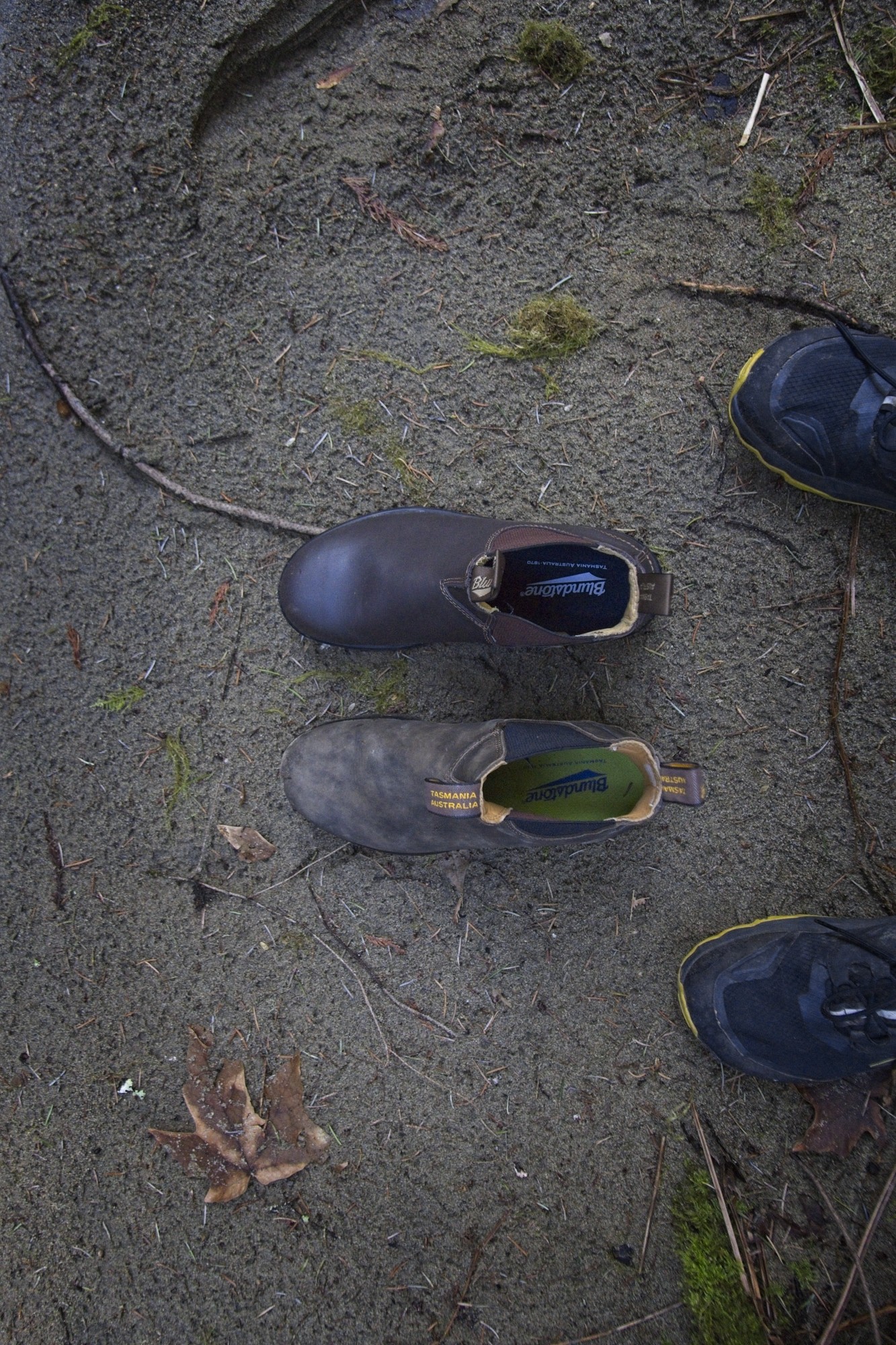
10 years ago I bought my first pair of Blundstones. All my friends had them and raved about them. I wasn’t sure. They weren’t cheap.
I wanted to wear them to work so I got the Chisel Toe (Dress in the US). They were a bit stiff to start. Once they broke in they fit my feet like a glove. The soles were firm but soft enough to wear them all day no problem. I travelled in them. I walked hundreds of kilometers in them. They looked good so I could wear them anywhere.
I’ve worn them almost every day since.
What amazed me most was how durable they were. I wear through running shoes in a year, maybe 2. Hiking boots I was getting a little longer. Paying hundreds of dollars every year or 2 for shoes, I wanted them to last longer.
10 years later, I’ve finally retired my Chisel Toe’s. I’ve beat the daylights out of them. They’ve been in the water, snow, hiking, and riding motorcycles. Places where nice leather boots probably shouldn’t go. The leather is still going. The soles have finally given up wearing them almost every day for the last 10 years. Money very well spent.
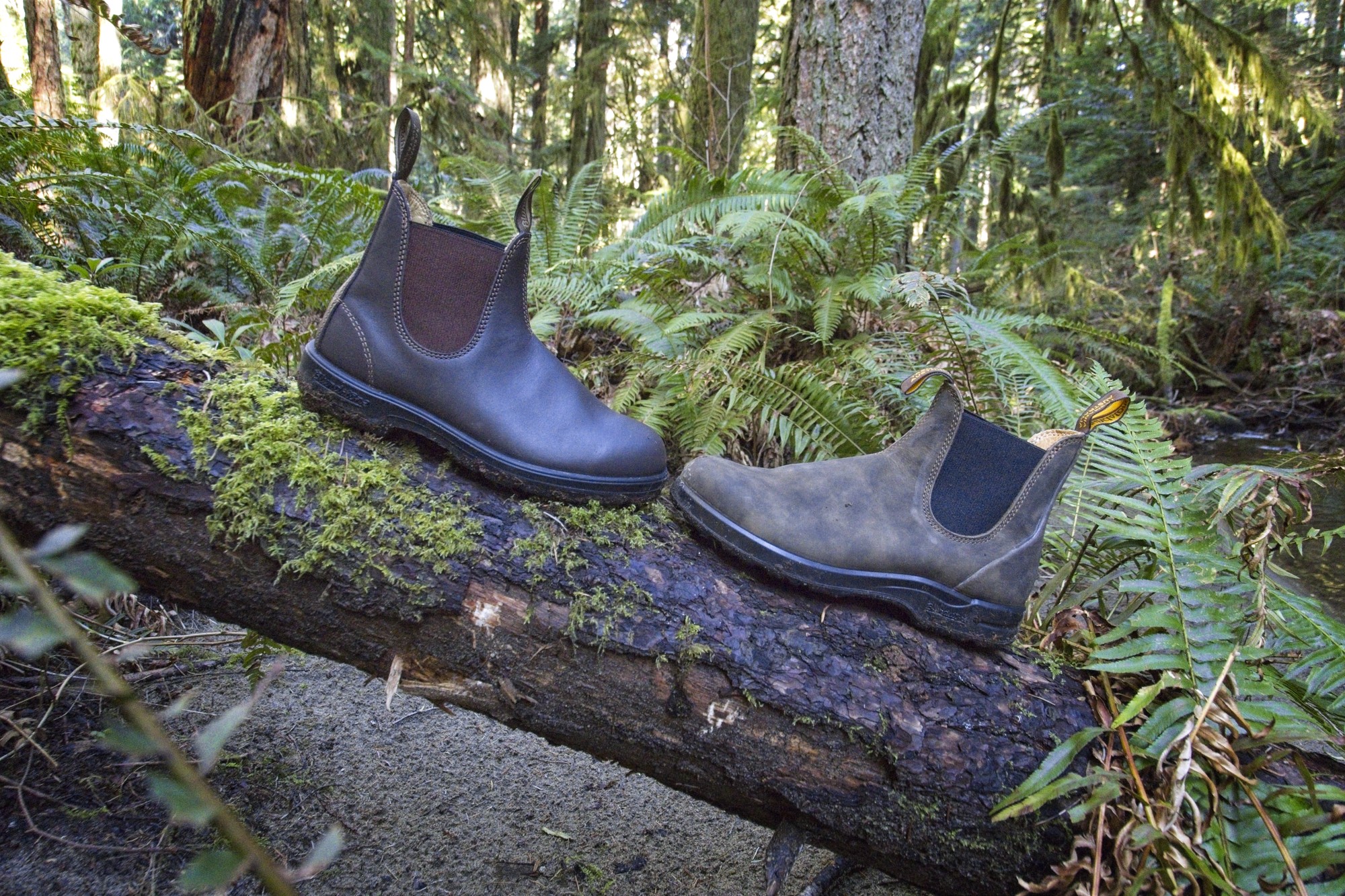
Now it’s time for a new pair. But do I go with the Classic or the All-Terrain. In my perfect rainbow and unicorn world, I can wear a pair of Blundstones for everything I do. Ride the motorcycle to work, work in the office, walk at lunch, hike a trail in the mud after work, camp and fish on the weekends.
Can a single pair of boots do all that and not be shredded? Time for a test. Stay here for a comparison or see the in-depth review of the Classic and the All-Terrain.
Blundstone History
In the 1850s, John Blundstone and his sons make the 93 day journey from England to Hobart, Tasmania. They started sourcing local leathers and making high quality footwear.
During World War 1 and 2, the company made boots for Australian troops.
In the 50s they focused on workboots, their soles working in 350 C smelters. In the 60s the #500 was born. They’re still made today and have sold 25 million pairs worldwide.
In the late 1970s a team wearing boots made by Blundstone climb Everest. In the 80s another factory is opened in New Zealand and exports to Europe start. In the 90s safety boots for women and a kids range start.
The 2000s see one million pairs annually and in 2020 Blundstone is 150 years old. They still aim for rugged, all-around boots that work hard and last a long time.
Today there’s a whole line of Blundstones for year round work and adventure in mens, womens, safety and kids.
The Classics, and more recently All-Terrain, are popular styles in the line. But what’s the difference?
Classics vs the All-Terrains
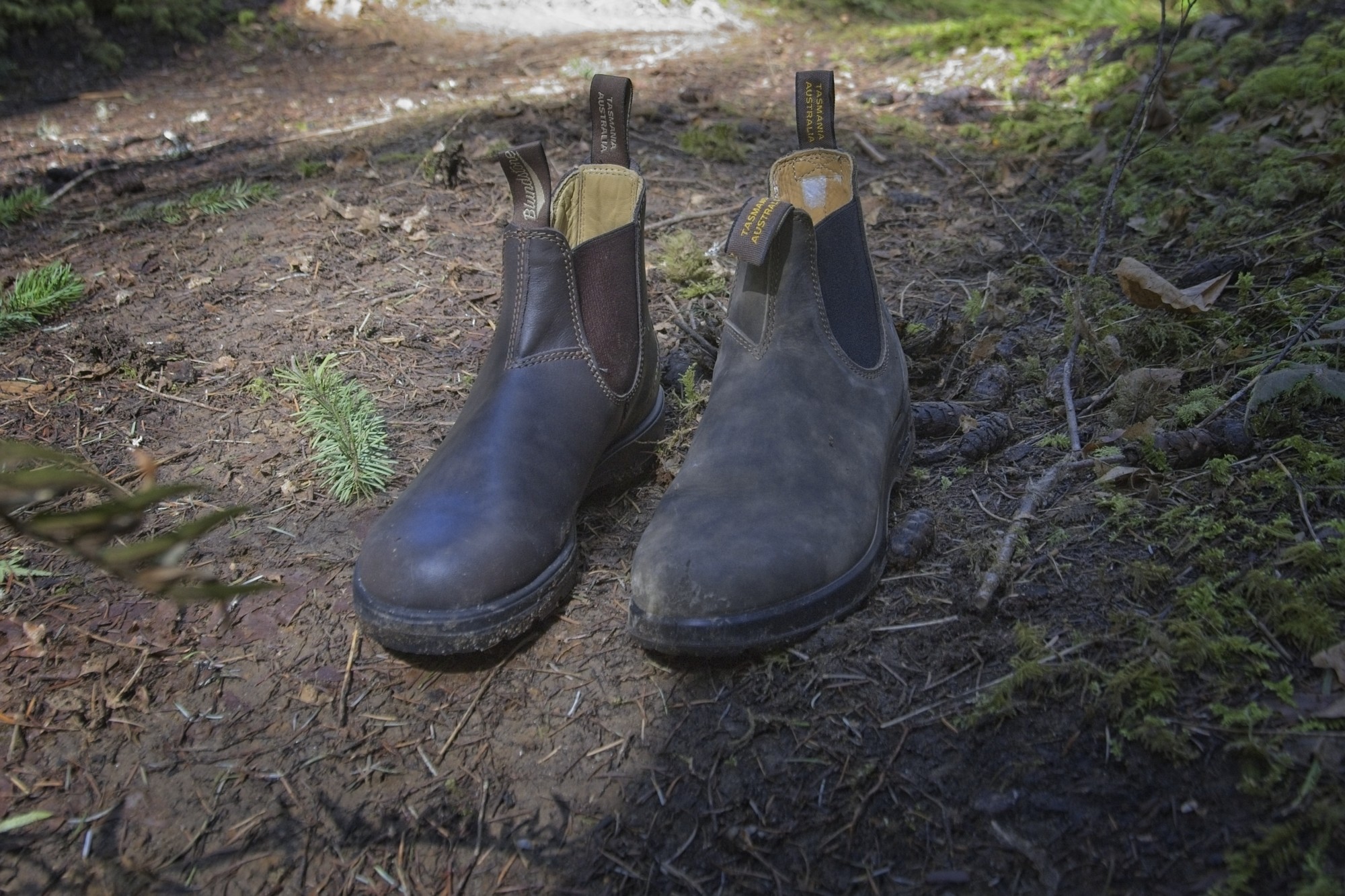
The Classics and All-Terrains are quite similar but with a few important differences.
- Easy on/off with Blundstone pull tag
- Elastic side panels for snug fit and natural movement
- Rounded toe Chelsea boot styling
- .8mm leather and breathable synthetic liner
- Soles resistant to acid, organic fat and oil
- PU midsole
- SPS with XRD shock absorption in heel
- Removable footbeds.
- Sizes range from US 4 to US 14. Half sizes are only a bit wider.
A few quick specs and then we can get into the differences.
| Classic | All-Terrain | |
| Water resistant leather uppers | Yes | Yes |
| Leather thickness | 1.8mm | 1.8mm |
| Double-stitching on heel | Exposed | Hidden |
| Midsole | PU | PU |
| Footbed | Comfort EVA | Comfort Lite |
| Sole | Blundstone TPU | Vibram TC4+ for wet terrain |
| Colors | 16 | 3 |
| Price | $239.95 CAD | $279.95 CAD |
What is SPS and XRD?
A special polyurethane section in the heel is the XRD shock absorbing foam. It’s normally soft, squishy, and flexible. When a force is applied to it quickly hardens. The harder it’s pushed, the harder it goes. Kind of like a non-newtonian fluid (oobleck for any of the parents or teachers here).
It doesn’t stay hard, it returns to soft and squishy as fast as it got there. Landing hard as a step on concrete or jumping off a rock and it supports the fall and then quickly returns to it’s regular state. It’s so fast that you don’t even feel it happen.
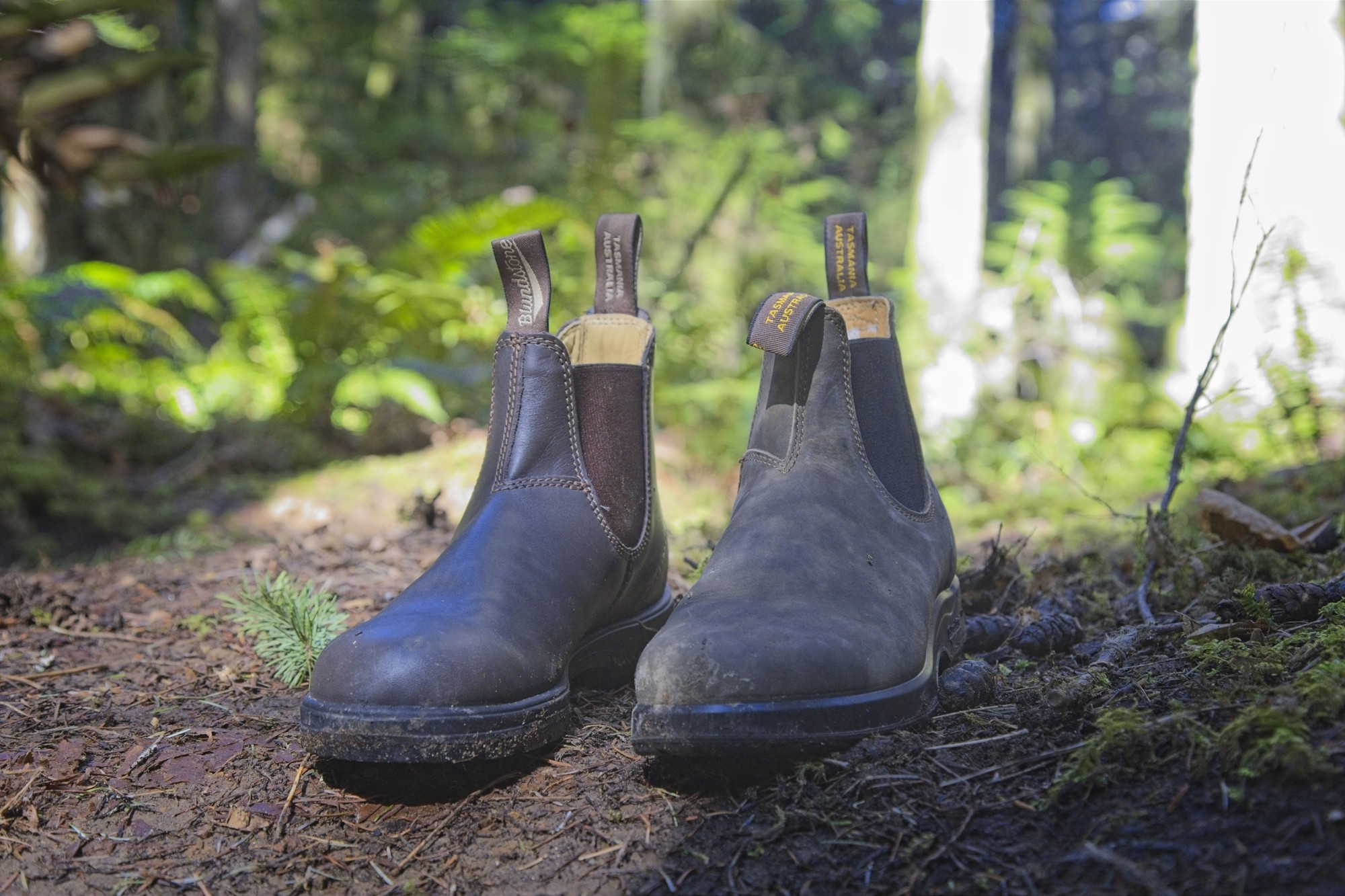
Blundstone Classic
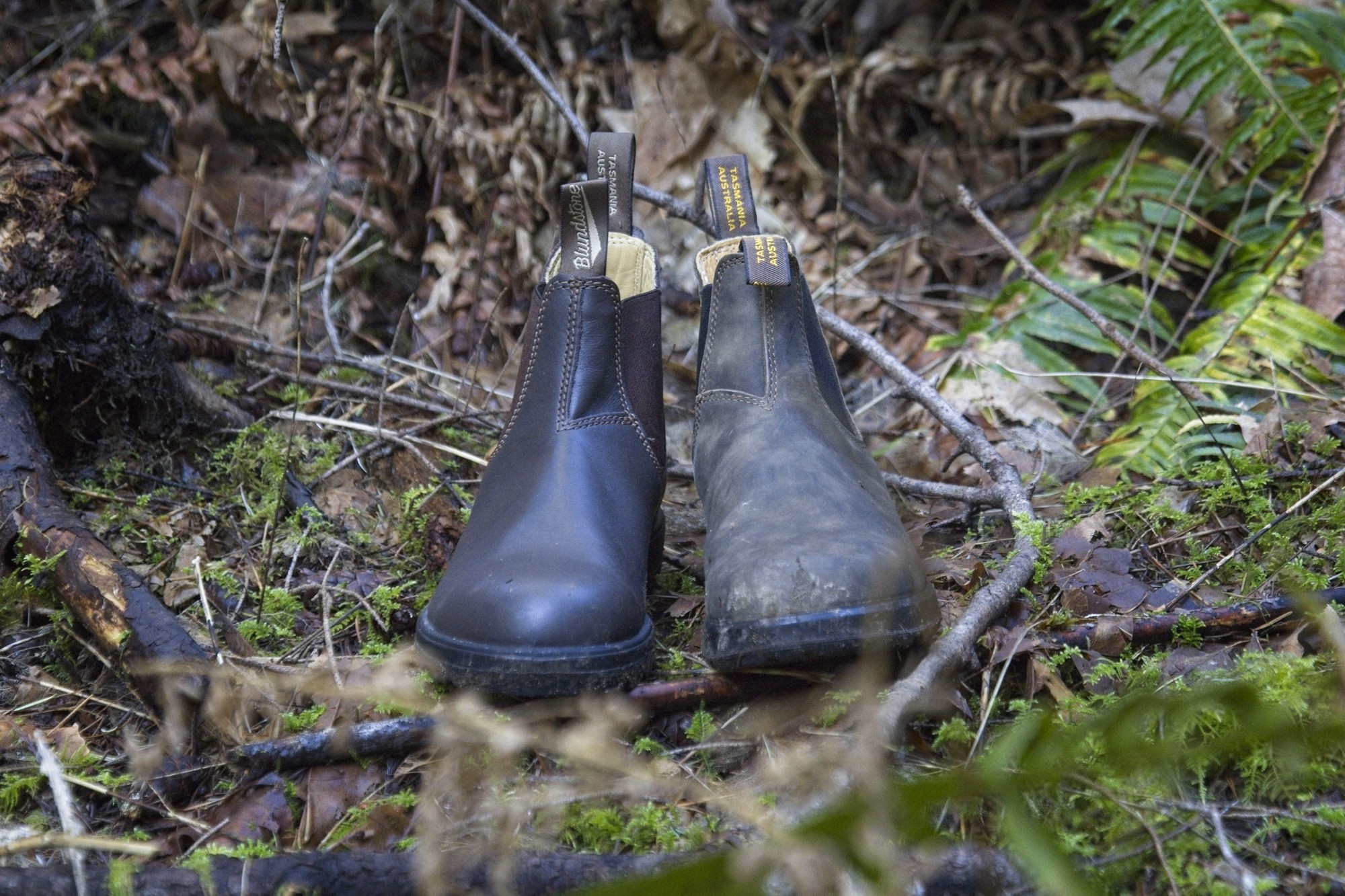
The Classics are an evolution of the #500 series originally launched in the 60s. The goal was a durable boot, for any environment, that would last forever.
The sole is a general thermo-polyurethane (TPU) sole with deep lugs. It’s designed to be long lasting and provide good traction on any surface.
On the back, the heel is double-stitched for extra durability. The stitching is exposed on the Classic.
Inside, they have a bit more volume and toe height than the All-Terrains.
Two pairs of Comfort EVA footbeds come with the Classic, one thicker than the other with a bit of XRD padding in the heel. Swapping the footbeds, or adding both together will give a different fit.
On top of some XRD in the footbed, there’s more built into the heel of the Classic. That’s where a lot of the weight and impact happens when you walk so there’s where the good padding is.
Classics are usually around $239.95 CAD. There is a thermal insulated version available for $289.95.
Blundstone All-Terrain
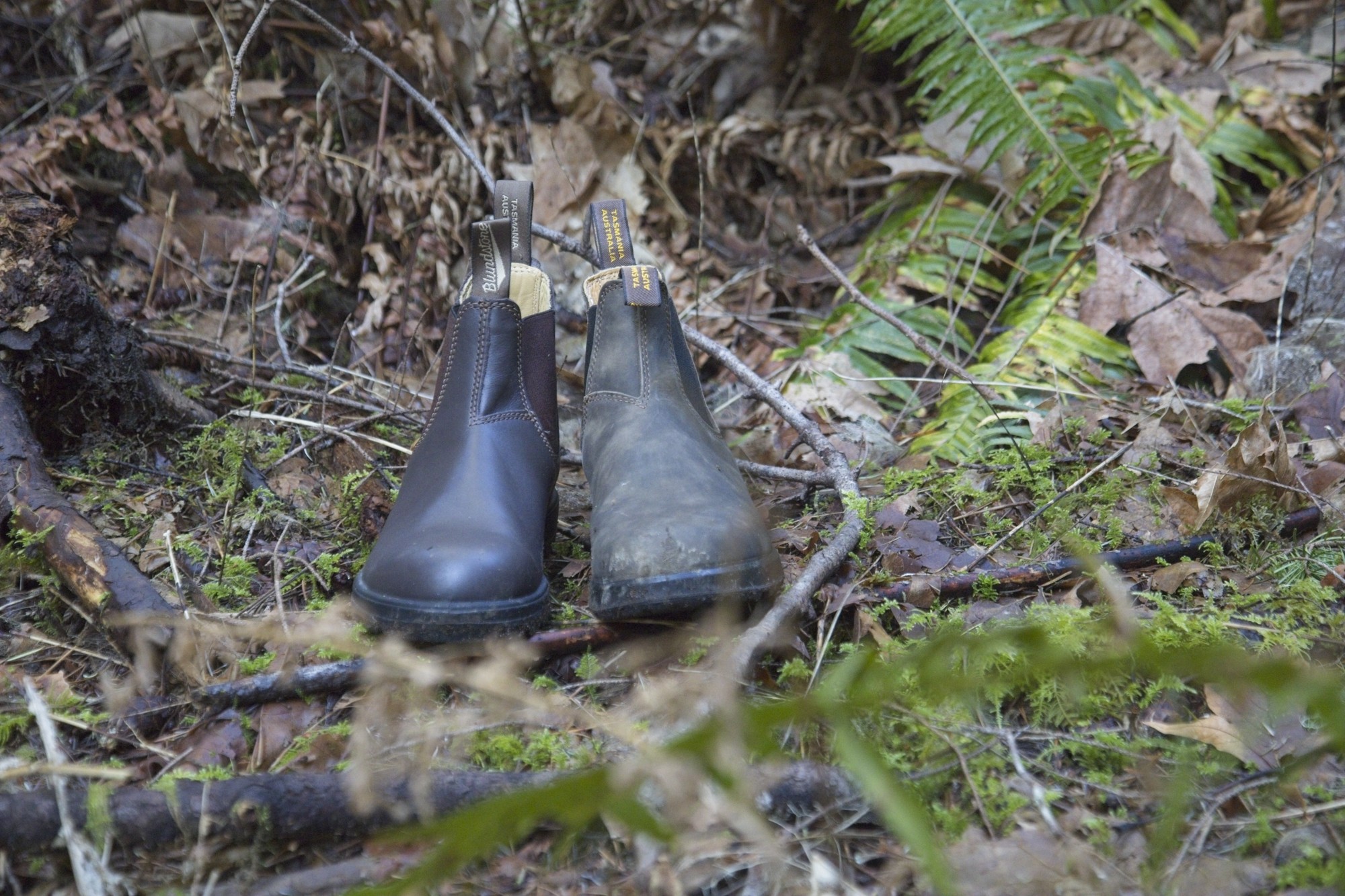
The All-Terrain launched in 2021. It’s a very similar rig to the Classic, mostly with a different sole.
The sole is a TC4+ Vibram sole, built for everything but excelling on wet, slippery surfaces. They work well from -15°C up to a staggering 300°C. The soles are built to have an increased amount of rubber on the ground but still self-release mud and rock as they bend.
The heel still has the durable double-stiching on the heel but it’s hidden, reducing the chance dirt and water gets in there.
Inside, the All-Terrain are slightly lower volume than the Classics. The toe height and arch are slightly more snug.
A set of Premium Comfort Lite are inside with a bit more cushion than the Comfort EVA footbeds in the classics. They still come with a second set regular Comfort EVA in case you need a second.
Just like in the Classic XRD shock absoprtion is built into the high impact area of the heel.
The All-Terrain cost a bit more than the Classics at $279.95 CAD. There is an insulated Winter Thermal version for $319.95 CAD.
Chisel Toe
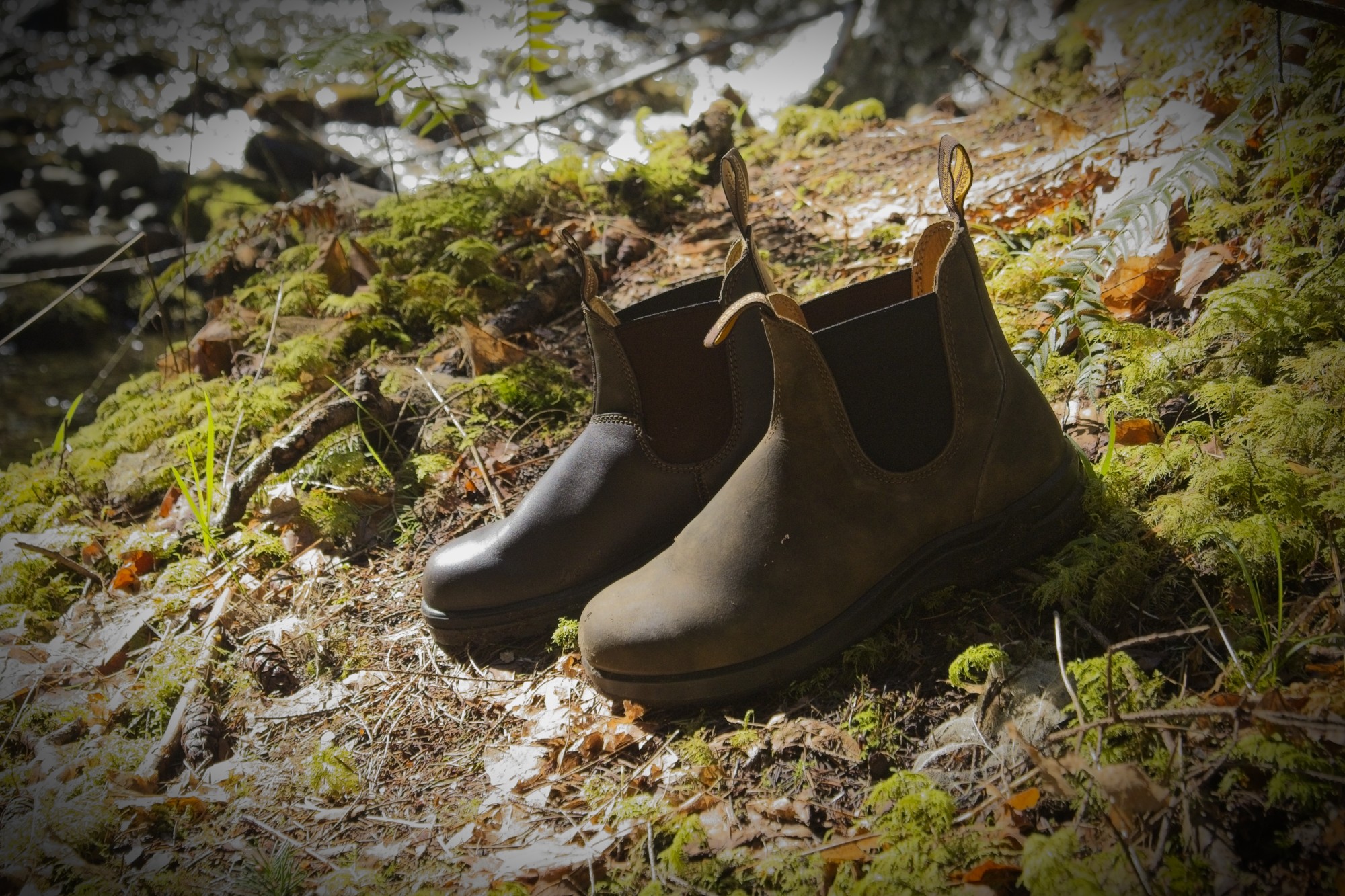
I’ve been wearing the Chisel Toe almost daily for the last decade. They’re a dressier option than the All-Terrain or Classic.
The sole is smoother without as much tread on it and a more consistent line where it attaches to the leather. Great for travel, going to work or out for the night. The smoother sole isn’t as good for the trail.
The sole itself is thinner than the Classic or All-Terrain with less shock absorption. I could still walk and stand on them all day no problem so they were still plenty thick to protect my feet.
If you’re need tread for dirt or mud, stick with the Classics or All-Terrains. If you’re looking for something more dressing, the Chisel Toe are perfect.
Sizing
Blundstones run in Australian sizing. Make sure you’re looking at the US or Australian size when you go to order. I highly recommend trying them on in a store to see what fits properly.
The half-sizes aren’t longer, only wider. So an 8 and an 8.5 is the same length but the 8.5 is wider.
The Chisel Toe is longer than both the Classic and the All-Terrain.