

A 100-watt solar panel that folds down to the size of a laptop? That’s the pitch behind the IBCPower 100W Foldable Solar Panel. Featuring TOPCon cells rated up to 24.8% efficiency and a tough IP67 rating, this little panel packs some good numbers on paper.
But how does it hold up in actual heat, real-world setup, and windy field conditions? Let’s get to the testing.
Not looking for this one? Check out our other solar panel reviews.
Pros
- Packs down smaller that bifold designs
- Higher IP67 water resistance
Cons
- More steps to set up
Specs
- N-type TOPCon high-efficiency cells
- up to 24.8% efficiency
- IP67 dust and water resistance
- MC4 charging cable
- 3.19 kg
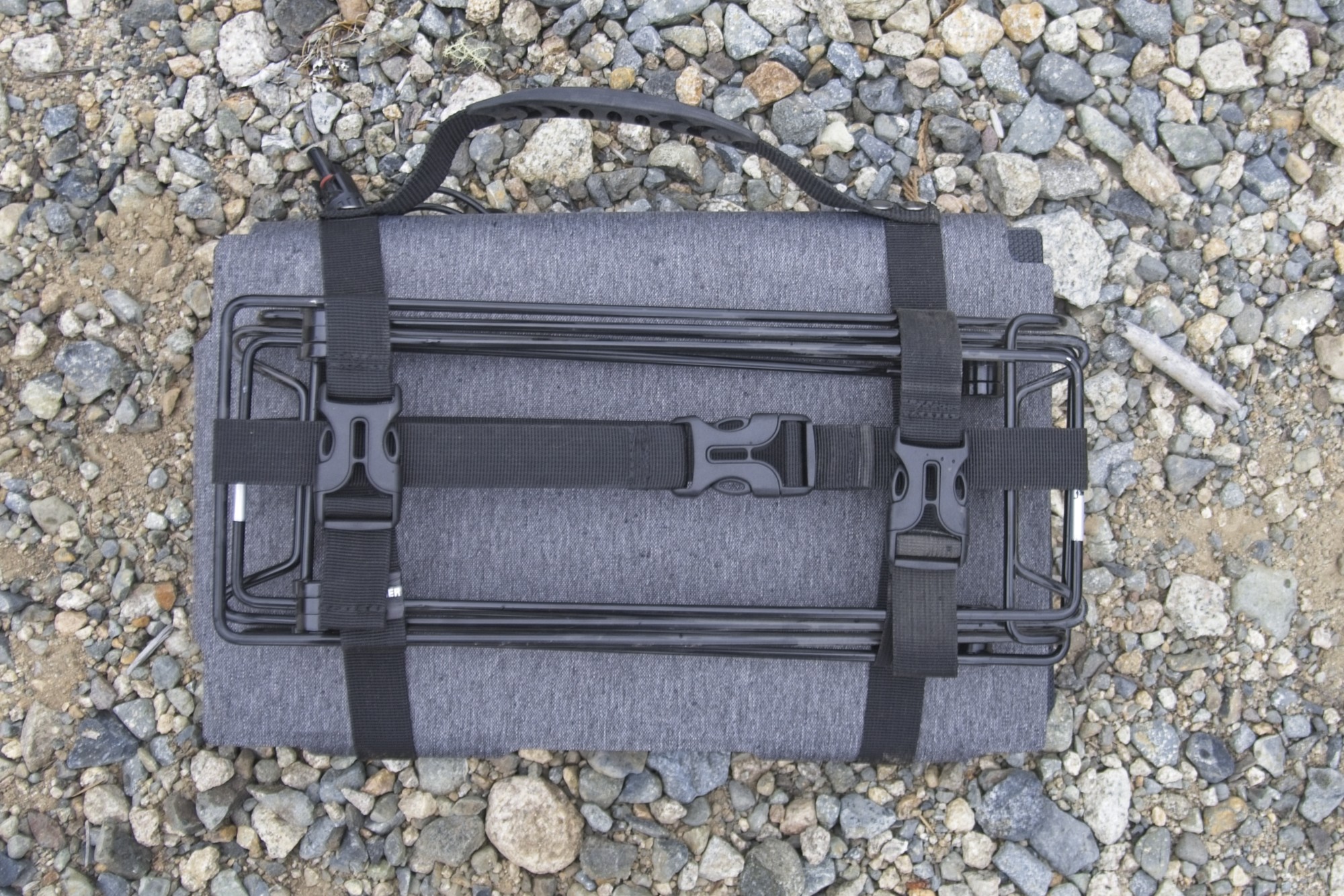
- Folded: 24.6×36.4×9.5 cm (with stand attached)
- Unfolded: 72.8×103.5×0.32 cm
Check price on the IBCPower Foldable 100 Solar Panel
Charging
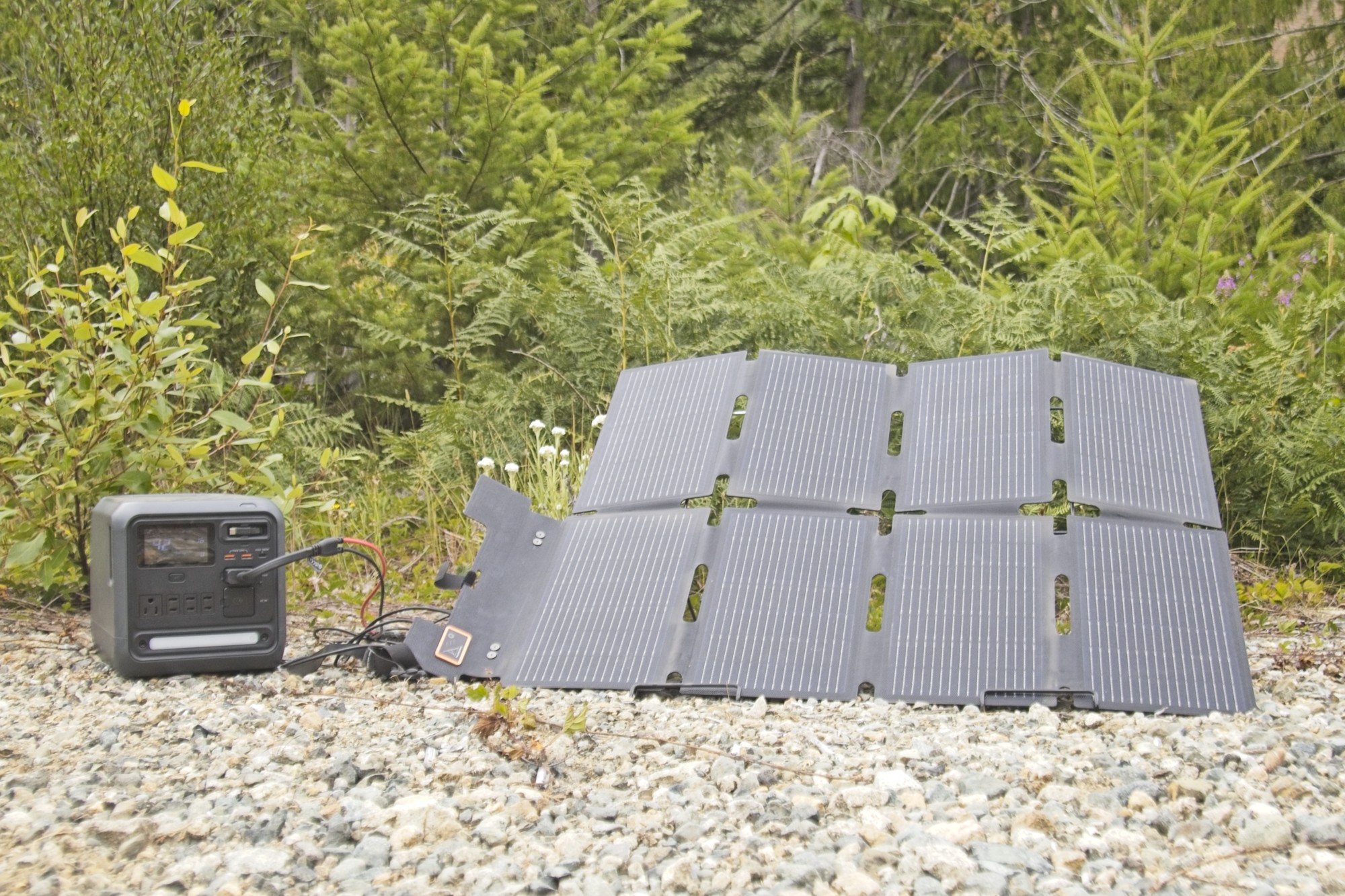
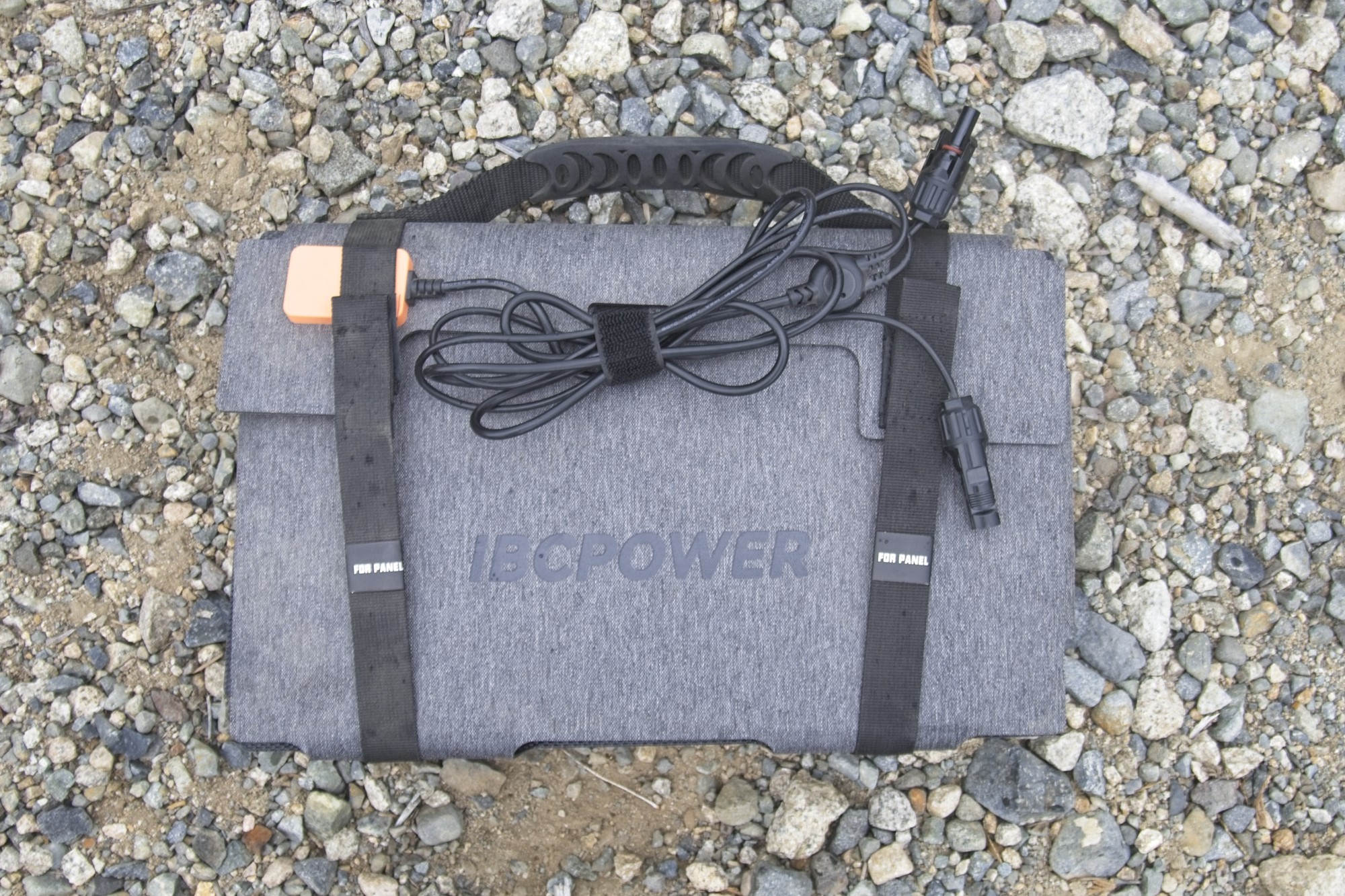
There’s one 6 foot cord with an MC4 connection on it. This can be plug multiple panels into a battery. With the DJI Power 1000 Mini, you’ll need the SDC to MC4 adapter to hook up.
There aren’t any USB plugs on the panel itself which can be handy but if you’re plugged into a battery, that will already have ports.
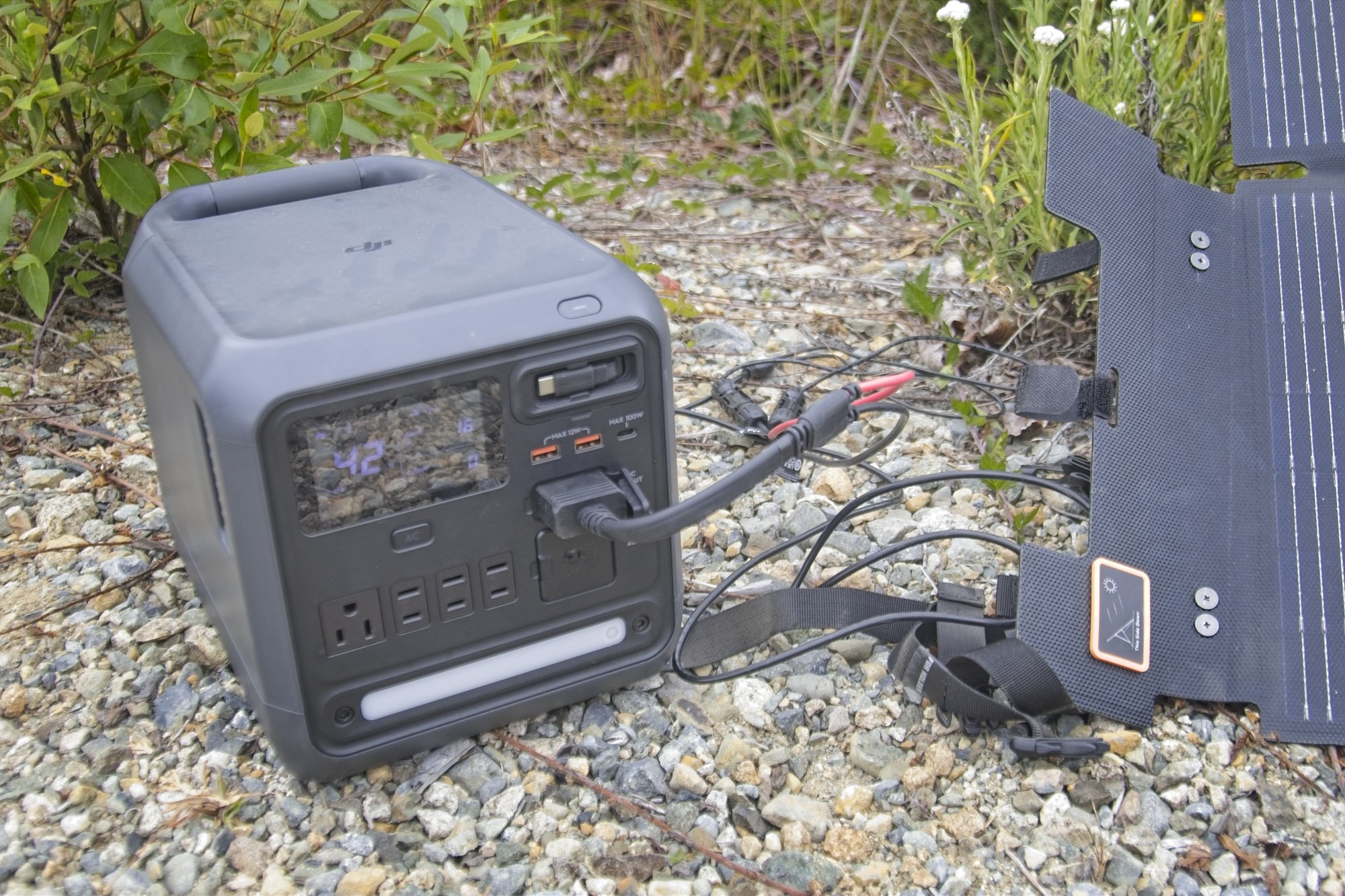
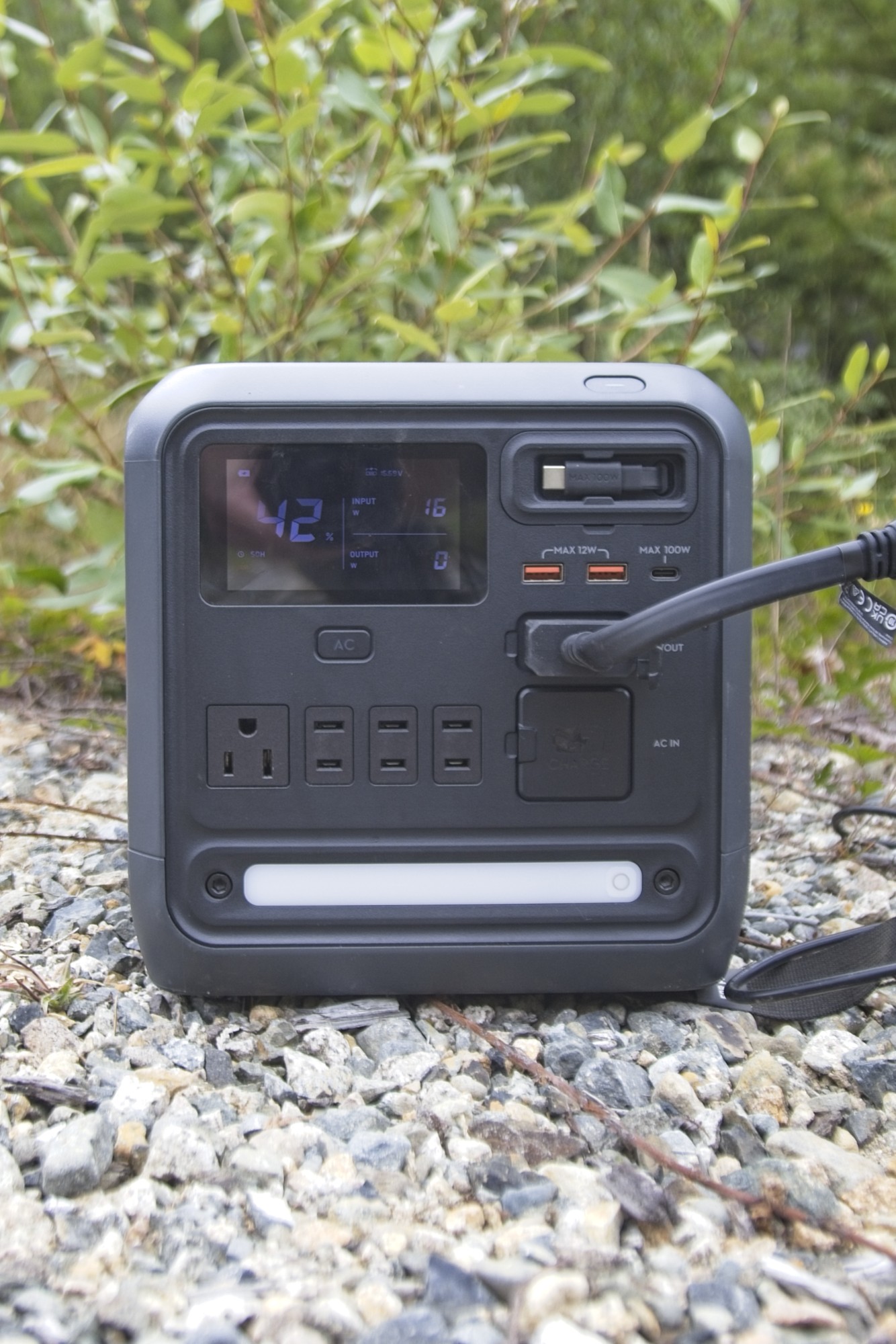
The newer N-type TOPCon cells seem to do their job. Compared to other foldable solar panels I’ve got from the last few years, it beat out all of them. The difference was only a few watts compared to other recent panels. Compared to panels with PERC cells, the difference was 5 to 10 watts. Over time this really adds up.
The N-type cells are also more efficient in high heat and low light.
Size
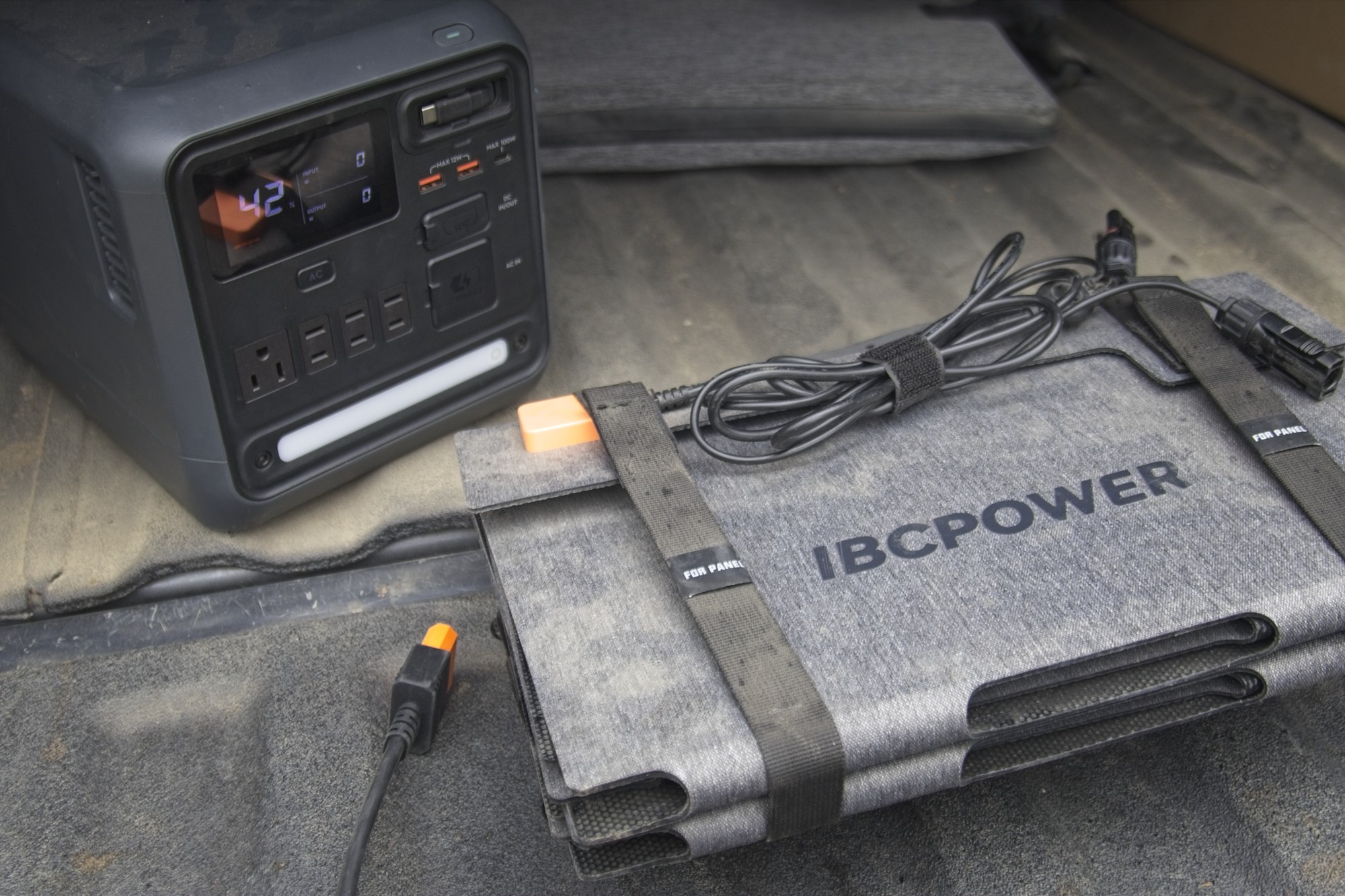
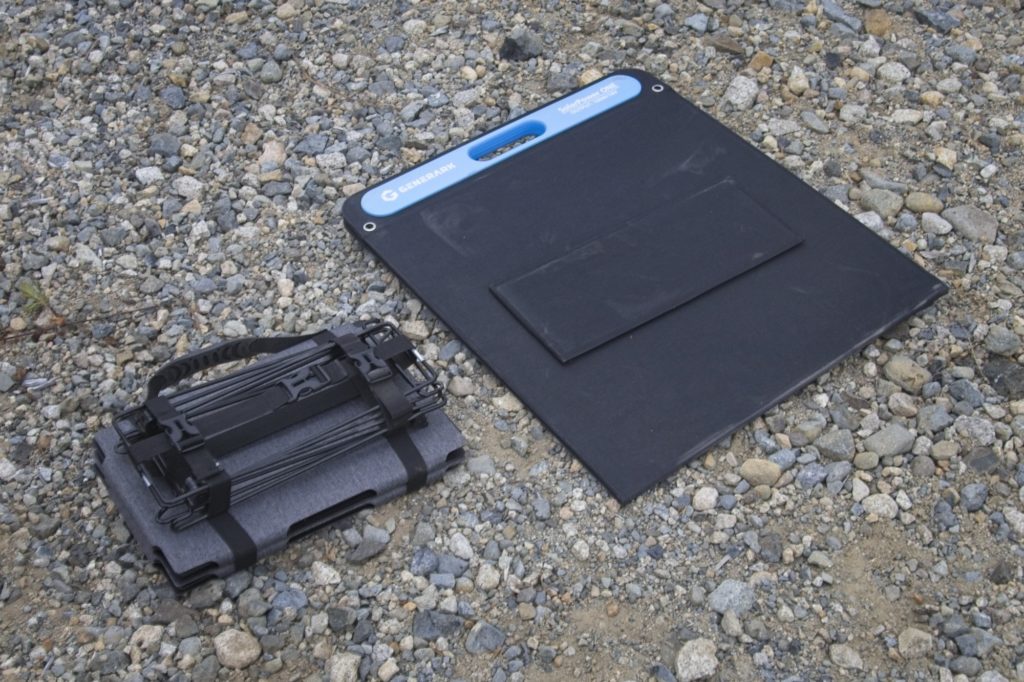
Compared to bifold designs (2 flat panels that open like a book), the IBCPower folds up much smaller. Length and width are considerably smaller.
After folding, there are multiple layers and the stands on the side so it is thicker than the bifolds. Overall It’s smaller and lighter than other popular 100W bifold designs I’ve seen.
| IBCPower 100W Foldable | Zignes 100W | Jackery SolarSaga 100W | Renogy EFlex 100W | |
| Weight | 3.19 kg | 4.1 kg | 3.6 kg | 4.3 kg |
| Folded Size | 24.6×36.4×9.5 cm (with stand attached) | 34.3×53.2×5.0 cm | 61.0 x 55.2 x 3.5 cm | 61.6 x 53.6 x 4.5 cm |
| Unfolded Size | 72.8×103.5×0.32 cm | 128.6×53.2×2.5 cm | 122.0 x 55.2 x 2.0 cm | 123.3 x 53.6 x .3 cm |
| Link | IBCPower 100W | Zignes 100W | Jackery SolarSaga 100W | Renogy EFlex 100W |
There are gaps between each of the small sections so you could hang it too. If you don’t need the stands, it’ll be a bit lighter and smaller to store.
Set up and Folding
Set up isn’t hard but is a little longer than bifold designs.
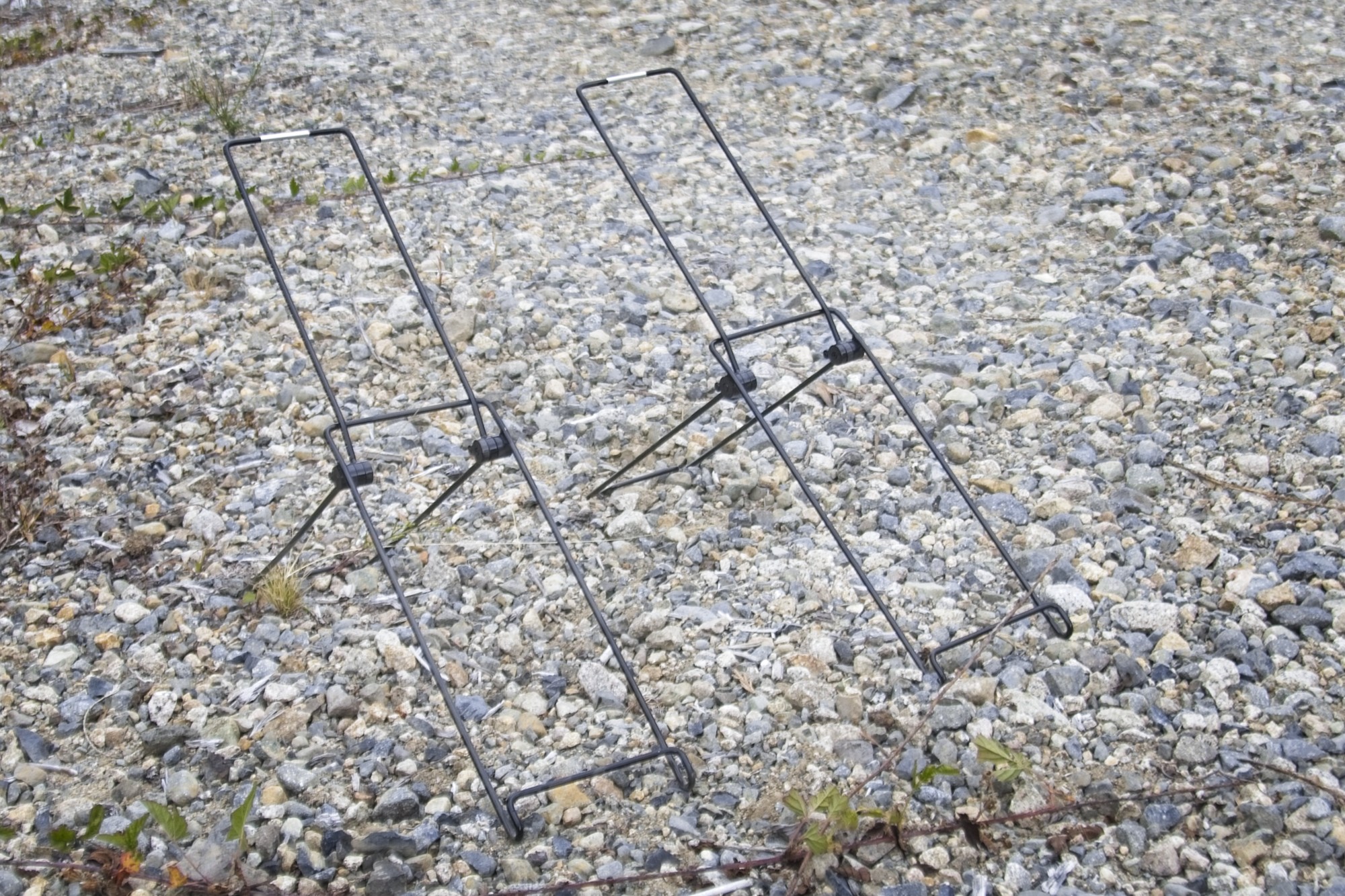
- Unclip stand and stand them up
- Undo velcro panel straps and put on stand
- Undo velcro on cord and plug into battery
Taking down is just the opposite.
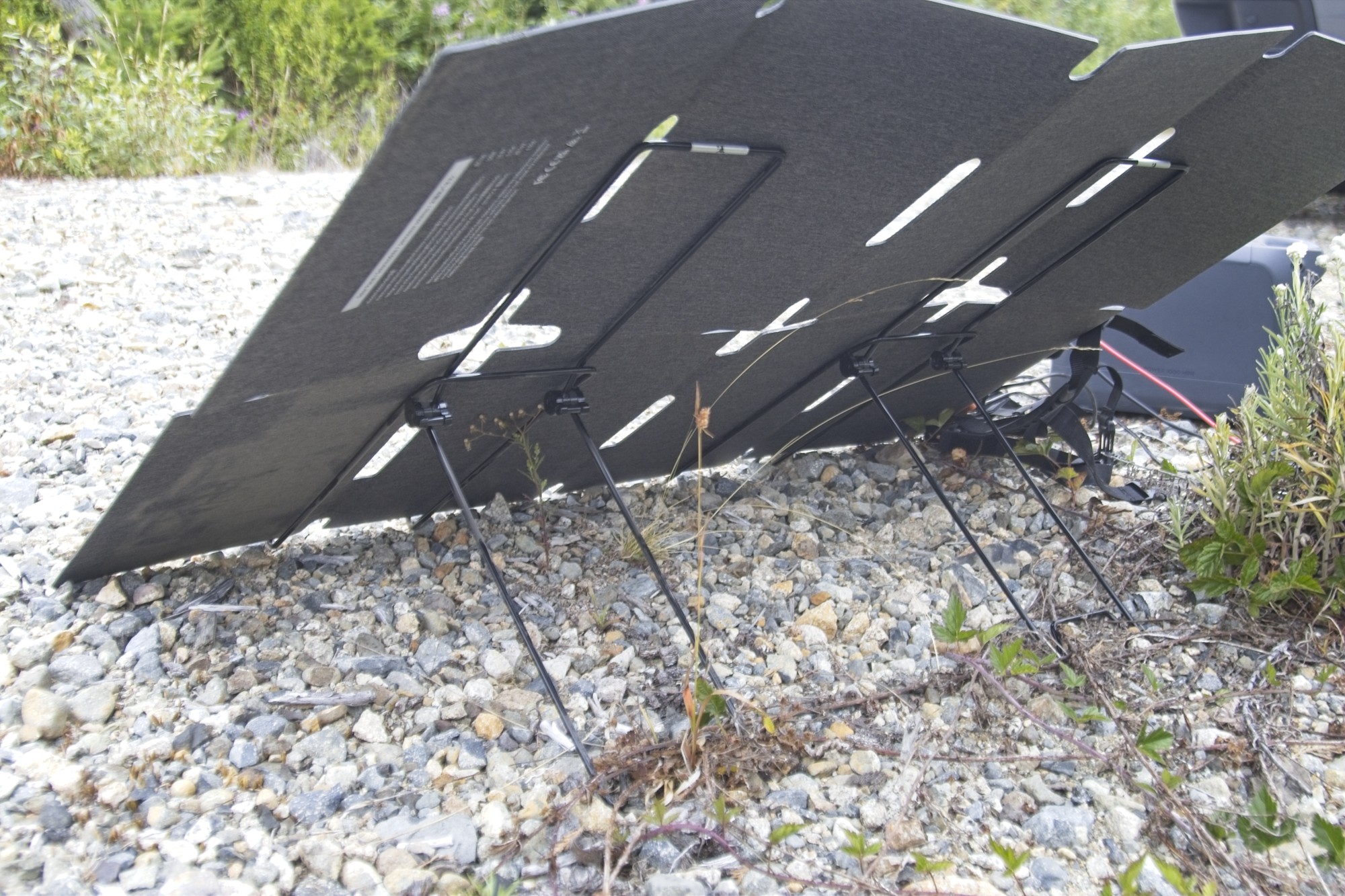
Setting up the stands in between the first and second panels and third and fourth panels kept it more flat facing the sun.
The stiffer structure of bifold designs is a bit more sturdy in windy weather. Hanging the IBCPower is easy with all the openings through the panel. It would be a bit easier if had grommets or connection points around the edges.
Moving
Small adjustments on the panel is easy. If found grabbing the pivot point on the stands and the panel itself through the wholes made it easy to move.
Moving it longer distances was harder as you have to manage the stands as well. If going more than a couple feet, I’d just grab the whole thing and set it up again.
It doesn’t really adjust angle well. The stands like to be at 45 degrees and it’s hard to keep them any angle other than that.
Water Resistance
The IBCPower have slightly higher water resistance, at 1P67 , compared to most of the other bifolds.
IP65 (most others) is good for rain and splash resistance. You can still leave them outside and it won’t harm anything. Your batteries might not be able to sit out in the rain though but that’s another issue.
The IBCPower IP67 can full go underwater for 1 minute and 30 seconds. I don’t think you’ll be putting your solar panels in the water but even if it’s heavily raining, they’ll be fine.
Final Thoughts
The IBCPower 100W foldable solar panel are a good option if you are limited on space or want small and light. The efficient N-type TOPCon solar cells beat out the PERC-type cells in my testing, sometimes as much as 10 watts.
The external stands require a bit more time to set up than the integrated stands of the bifold designs but both required 2 hands to set up and move.
The IBCPower comes in at the same price as Zignes 100W 2 fold design that DJI also sells. The bifolds are a bit easier to set up but are heavier and larger to store.
The N-type TOPCon cells produce measureably more watts than PERC-type cells I tested. I was getting 10 more watts from the IBCPower in all kinds of light. If you are ok with 20 more seconds of setup, they efficency gain charging and storing is worth it.
Verdict: Recommended
$285.54 CAD / $209 USD